






 About us

 More results
- Digitalization
Categories:
Cybersecurity in critical infrastructure can no longer be approached as an additional layer or as a reaction to incidents. In the current context—shaped by regulations such as NIS2 and the Cyber Resilience Act (CRA)—security must be integrated from the concept and design phase of systems. It is not an added value; it is the minimum requirement for designing, building, and operating critical assets sustainably.
For an engineering company like Sener, this approach translates into a very clear idea: every digital asset is born with security built in. From a PLC deployed in the field to a large-scale OT monitoring platform, cybersecurity is part of the initial design rather than a later phase based on patches, exceptions, or reactive solutions.
This approach significantly reduces the risk of service interruptions and enables a more predictable, efficient, and cost‑effective operation throughout the entire lifecycle of the infrastructure.
What Does “Cybersecurity by Design” Really Mean?
Talking about security by design means incorporating cybersecurity requirements and controls across all stages of the hardware and software lifecycle. It is not merely about deploying technology, but about treating security as a functional requirement of the system, on the same level as availability, operational safety, or performance.
In practice, this approach relies on five key pillars:
- Risk and threat analysis from the earliest engineering phases
- Secure architecture design, aligned with OT and IT environments
- Design and development decisions based on the principle of least privilege
- Security testing and controlled commissioning
- Secure operation, with update capability and managed change control
From this model, essential and measurable principles are derived: reduced attack surface, defence in depth, effective segmentation between OT and IT networks, robust identity and access management, and secure update mechanisms throughout the system’s lifespan. All of them align with new regulatory requirements for products and systems with digital elements.
From Theory to Practice: OT Cybersecurity in the Railway Sector
A representative example of this approach is the “OT Cyber Security Uplift” programme developed for Sydney Trains, where Sener has integrated advanced cybersecurity capabilities into existing OT systems.
The goal was not merely to deploy tools, but to measurably increase the security maturity of the most critical railway assets. This work has reduced vulnerabilities in safety‑critical environments, aligned operations with regulatory best practice, and reinforced the resilience of Sydney’s railway network against increasingly sophisticated threats.
Impact on Energy, Industry, and Mobility
In the energy and industrial sectors, Sener’s approach combines international frameworks such as IEC 62443 with national and European security requirements—such as the Spanish ENS adapted to NIS2—to design DCS, SCADA, and other complex industrial systems featuring:
- Proper OT/IT segmentation
- Dedicated security monitoring capabilities
- Vulnerability management integrated into operations
In the mobility sector, OT Security solutions connect the design of resilient infrastructure with near real‑time detection and response, ensuring new projects are prepared both for NIS2 audits and for the demands introduced by the Cyber Resilience Act.
Design Secure Today to Operate Tomorrow
In critical infrastructure, there is no room to improvise cybersecurity. Designing secure systems from the outset not only reduces risks: it improves availability, simplifies operations, and protects investments aligned with business objectives.
Cybersecurity is no longer a patch. It is—and must be—a design decision.
- cybersecurity
Tags:
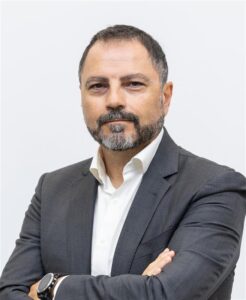
César de la Serna
Ingeniero de Sistemas por la universidad Politécnica de Madrid. Más de 20 años de experiencia en gestión de proyectos de ciberseguridad, cumplimiento normativo y convergencia TI/OT en sectores altamente regulados. Experto en estándares como DORA, NIS2, RED, CRA, CER, ISO 27001 e IEC 62443, con una sólida trayectoria como CISO y responsable de consultoría y evaluación de sistemas críticos. Líder en el desarrollo de servicios de ciberseguridad, auditorías, certificaciones y relación con operadores telco y organismos reguladores. Visión estratégica, capacidad de ejecución y experiencia en la gestión de equipos multidisciplinares. Creación de áreas de ciberseguridad, implantación de laboratorios certificados ISO 17025 e ISO 17065 y alineamiento con organismos reguladores (ETSI, INCIBE, UNE, TEDAE).

